
Understand Curtain Fullness
Fullness is how much fabric goes into the pleats and folds. More fullness = richer, heavier drape. Less fullness = cleaner, more streamlined look.


STEP 1
Start by measuring your rod or track. If it isn't installed yet, decide on its placement first — that planned length becomes your working measurement.
Measure the rod/track full length. This measurement represents the total width your curtains will cover.
We recommend extending the rod/track 6-12 inches beyond each side of the window frame. This creates a more expansive look and allows curtains to be drawn fully open without obstructing the window.
Fullness is how much fabric goes into the pleats and folds. More fullness = richer, heavier drape. Less fullness = cleaner, more streamlined look.
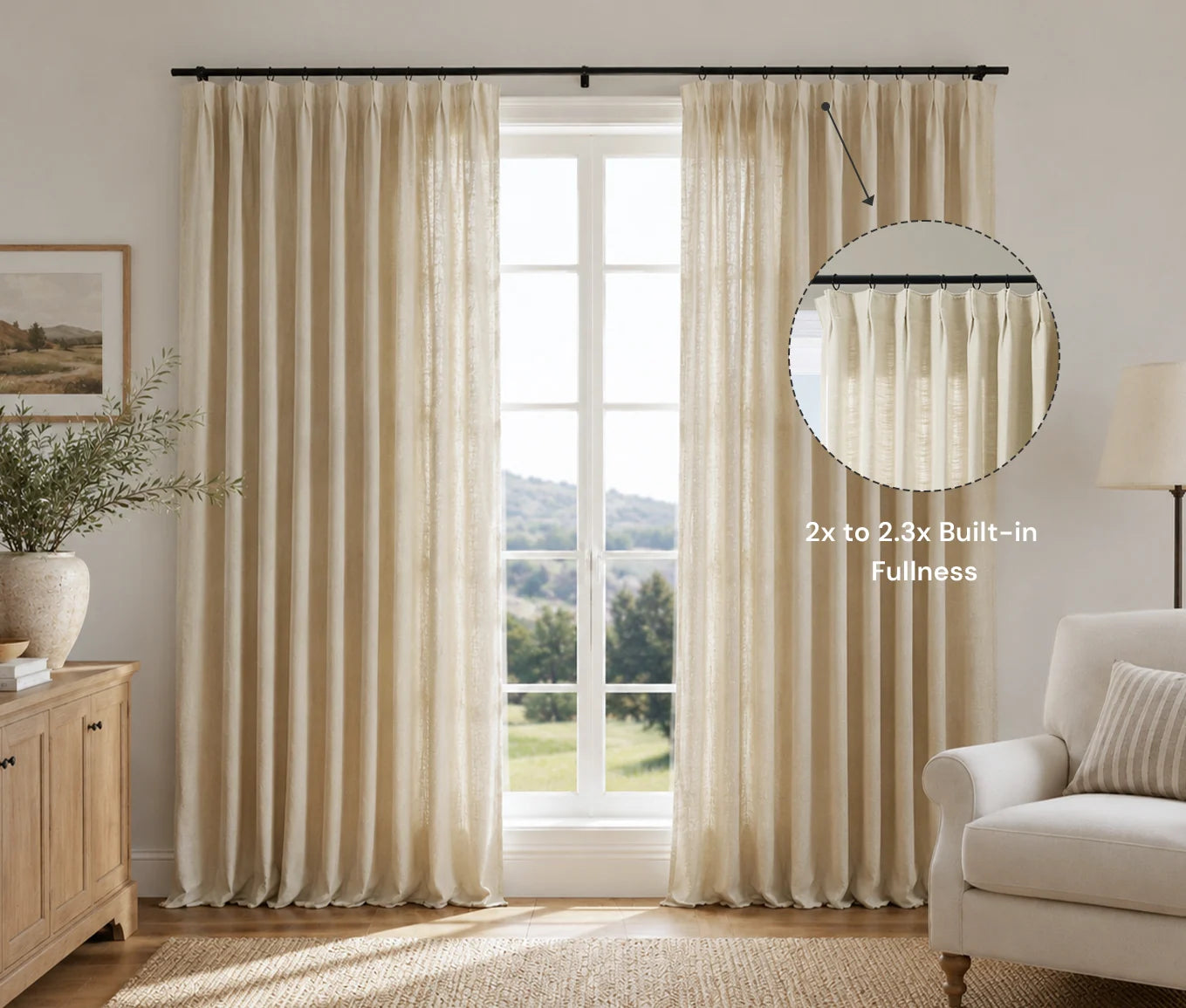
Our pleated curtains come with built-in fullness, meaning you generally don't need to add extra width for pleats.
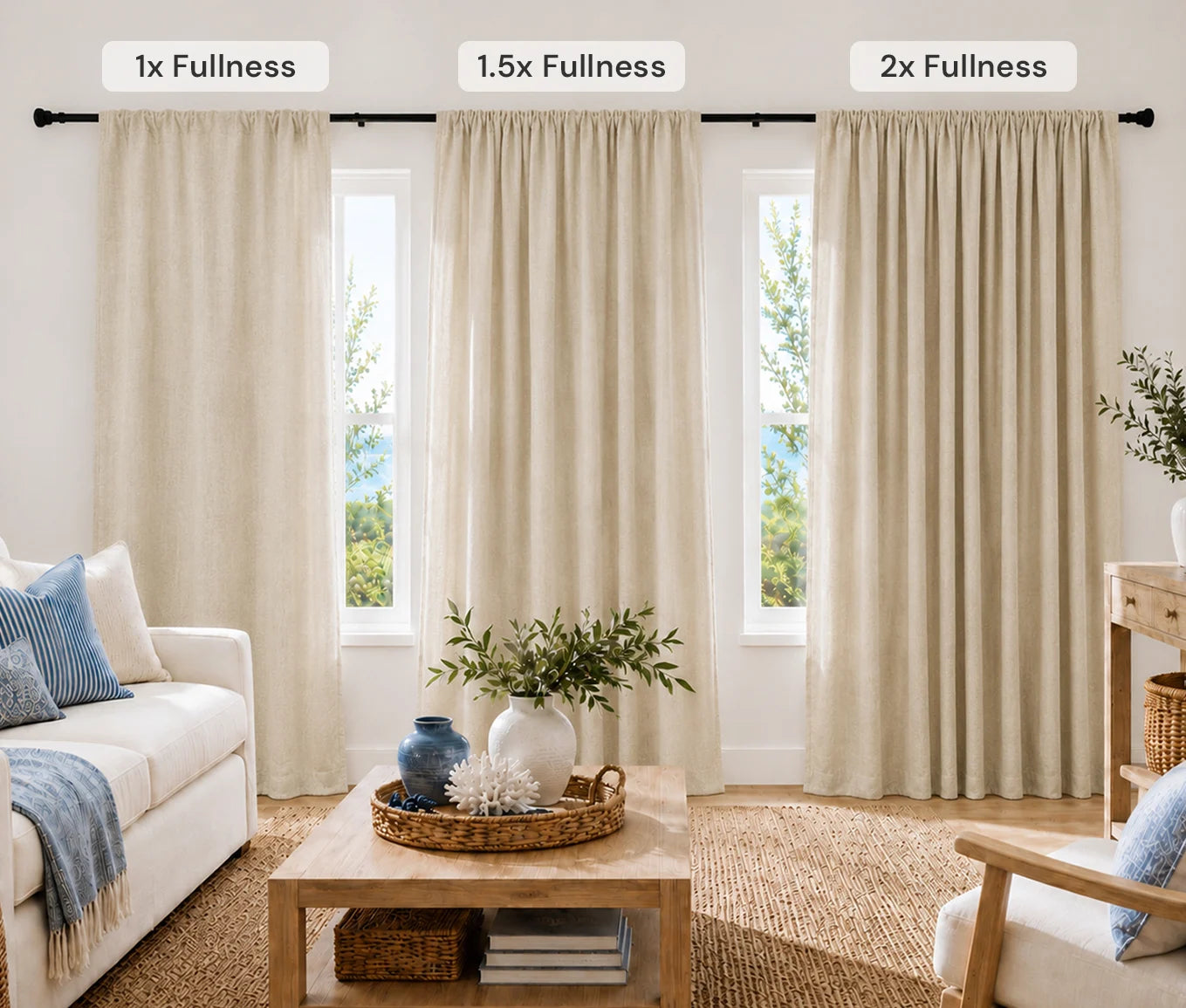
These styles are designed with 1x fullness (flat width). Therefore, you will need to select your preferred fullness to achieve the desired drape and aesthetic.
Recommended Fullness:
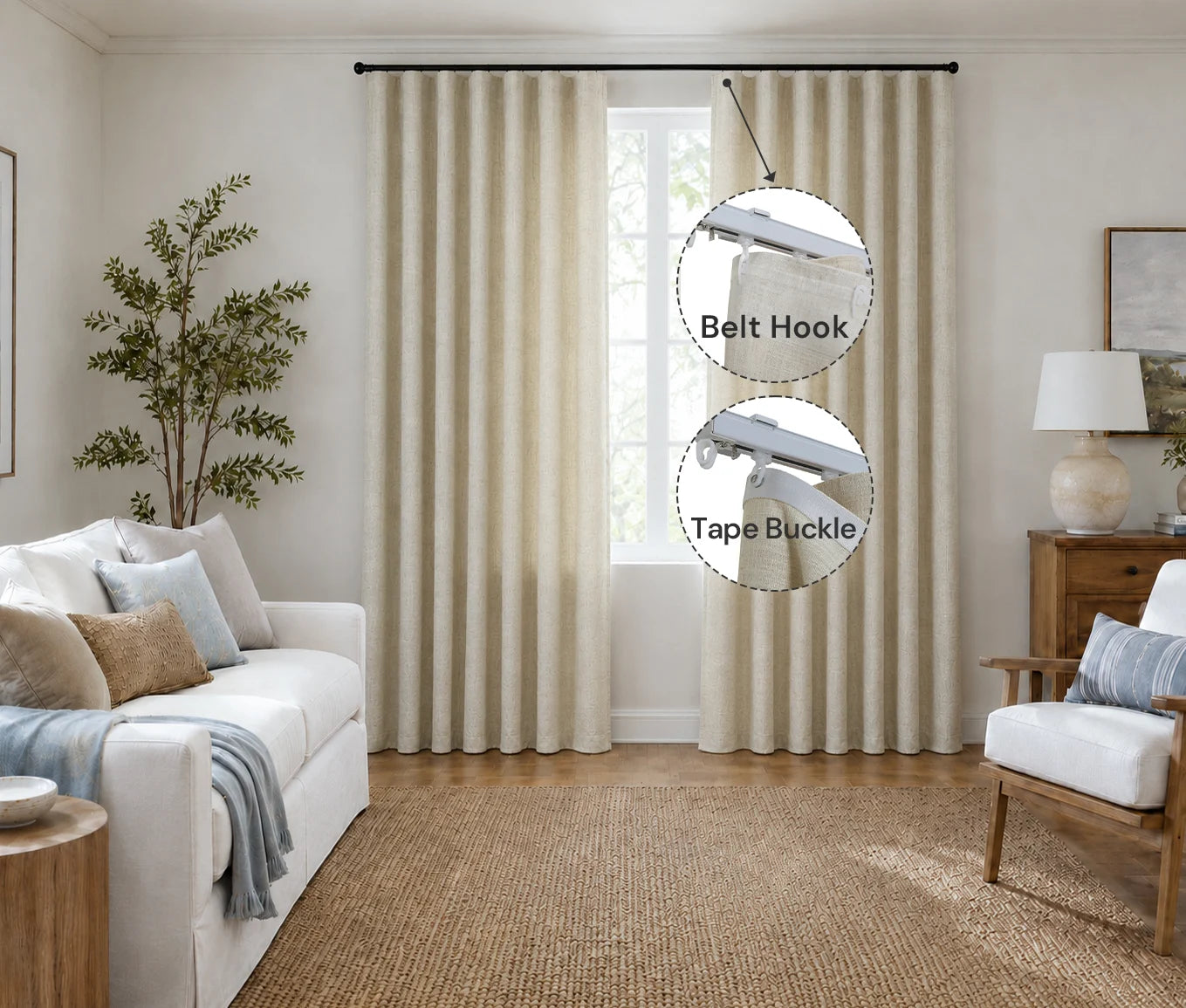
Our ripple fold curtains are already fullness built in. About 2x fabric width is used to create the fold. You don't need to add extra width for the fold.
Based on your chosen curtain style and desired fullness, calculate the total width you need to order.

Pleated
Fullness: Built-in(2-2.3x fabric default)
Order Width: Rod Track Length / Panel Qty
Example: If your rod length is 100 inches and you choose 2 panels, each panel's order width will be 100 inches / 2 = 50 inches.

Rod Pocket
Fullness: Choose 1.5x / 2x
Order Width: Rod Length / Panel Qty
Example: If your rod length is 100 inches, you desire 2x fullness, and you choose 2 panels, each panel's order width will be (100 inches x 2) / 2 = 100 inches.

Grommet
Fullness: Choose 1.5x / 2x
Order Width: Rod Length / Panel Qty
Example: If your rod length is 100 inches, you desire 2x fullness, and you choose 2 panels, each panel's order width will be (100 inches x 2) / 2 = 100 inches.

Ripple Fold
Fullness: Built-in (approx. 2x fabric default)
Order Width: Track Length
Examples: If your track length is 100 inches, you simply order 100 inches wide.


STEP 2
Start by measuring your rod or track. If it isn't installed yet, decide on its placement first — that planned height becomes your working measurement.
Where you start measuring depends on your curtain style. Find your starting point below, then measure straight down to the floor or your preferred endpoint.
We recommend mounting the rod or track 6–10 inchesabove the window frame. This visually elongates the window and makes the room feel taller. Once you've confirmed that height, use it as your starting point for the measurement below.

Pleated
Measure from the ring eyelet/track runner.

Rod Pocket
Measure from the rod top.

Grommet
Measure from the rod top.

Ripple Fold
Measure from the track bottom.
Different curtain drop lengths create diverse visual experiences and styles for your room.

Sill Length
The curtain hem falls just below the window sill. This style is clean, neat, and often preferred for kitchens or children's rooms.

Float Length
The curtain hem is designed to hover slightly above the floor (approximately 1 inch clearance), creating a tailored and low-maintenance finish.

Floor Length
The curtain hem gently kisses the floor. This classic and elegant look creates a polished and sophisticated appearance.

Puddle Length
The curtain fabric pools gracefully on the floor. This style offers a romantic and luxurious feel, often chosen for bedrooms or formal living areas.